






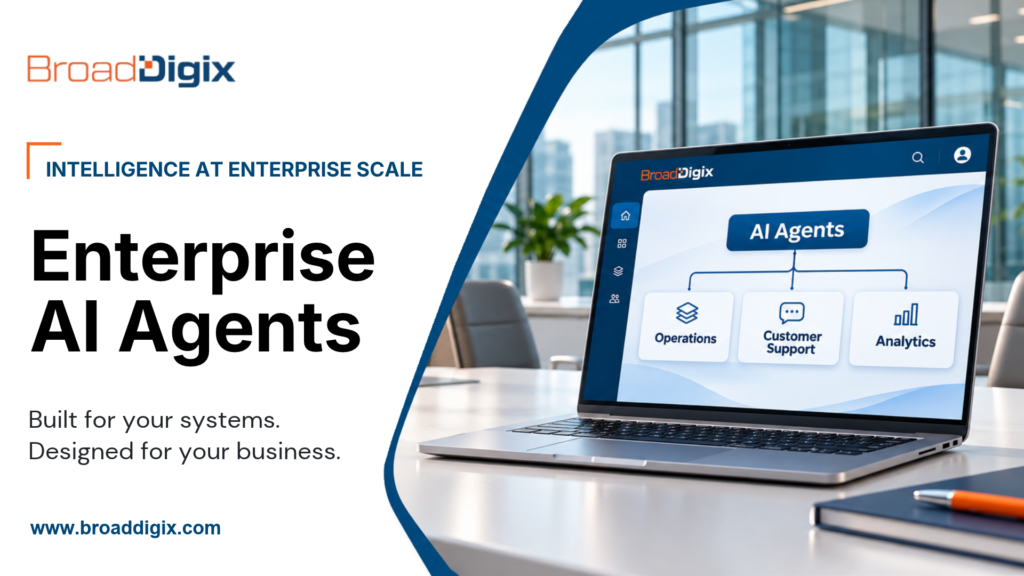
1. Define the Business Problem for AI Agent Development for Enterprises
This is the most important decision you’ll make. Think about a scenario where your HR user queries an enterprise agent to find out some private information about an employee.
Whilst you’ll likely have some solution to offer your buyer, start with defining what the task is. Within your multi-department organisation, who is using the agent capabilities during pilot? What are they trying to achieve and what is causing pain right now? This is your true brief and will help those looking into developing enterprise AI agents to think about how they can solve your business pain. AI agent development for enterprises should always begin with a clearly defined business problem rather than a technology-first approach.
When discussing your first conversation, try to separate the outcome from the tool. Ask your CIOs, platform and governance leaders to explain what is happening before and after the task. Only then look at your identity providers, document storage, enterprise APIs and monitoring tools to understand what handovers need to take place.
This will ensure you’re not building a complex solution to a vague problem and it will make your decisions easier to justify. Always ask them to provide a definition of success in writing. The next useful step when looking into developing enterprise AI agents is to ensure you’re solving their business pain.
2. Identify Enterprise AI Agent Users and Their Daily Workflows
Whilst it’s tempting to think about everyone who could benefit from the solution, this rarely helps your team make useful decisions. Instead, start by thinking about the employee using limited information within the organisation. When is this causing them pain? What would an ideal outcome really look like? For example, if you’ve run a pilot workshop and found that 3 different departments use the word ‘approved’ differently. This will help you to make decisions before you start building. When looking into developing enterprise AI agents think about what they do on a daily basis.
Try to decide what is an essential vs nice-to-have capability. Whilst persona documents aren’t that useful, asking them to honestly tell you what they do during the week will help. Ask them when they do the task, what is interrupting them and who they ask for help.
This may impact the features you need, staff assumptions and what order you introduce features in. If you don’t consider the context, your tool won’t get noticed. The next useful step when looking into developing enterprise AI agents is to ensure you’re solving their daily tasks.
AI agent development for enterprises becomes more effective when employee workflows, responsibilities, and business requirements are clearly understood.
3. Define Enterprise AI Agent Security and Governance Constraints
Start with defining constraints at the very start. This will help your business and users. Decide if you’d like your agent to act as the user or have a highly defined service account. If you define your constraints in writing you’ll give your development team the confidence to say ‘no’ to anything outside of what’s been agreed. When looking into developing enterprise AI agents think about your constraints. For successful AI agent development for enterprises, security, governance, and access permissions must be considered from the beginning.
For example, if your search tool shows the record correctly for one role but incorrectly for another. This will help you to make decisions before you start building. Design constraints are a practical way of defining what your solution can do. You’ll know what the user needs to do themselves and what will be escalated. If you don’t consider the roles, what looks like a useful agent could show confidential information.
You’ll need to clearly define who is responsible for approvals and exceptions. Often teams will find that a simple decision table will help to avoid any confusion. Ensure you know who can resolve any exceptions. The next useful step when looking into developing enterprise AI agents is to ensure you’re solving their constraints.
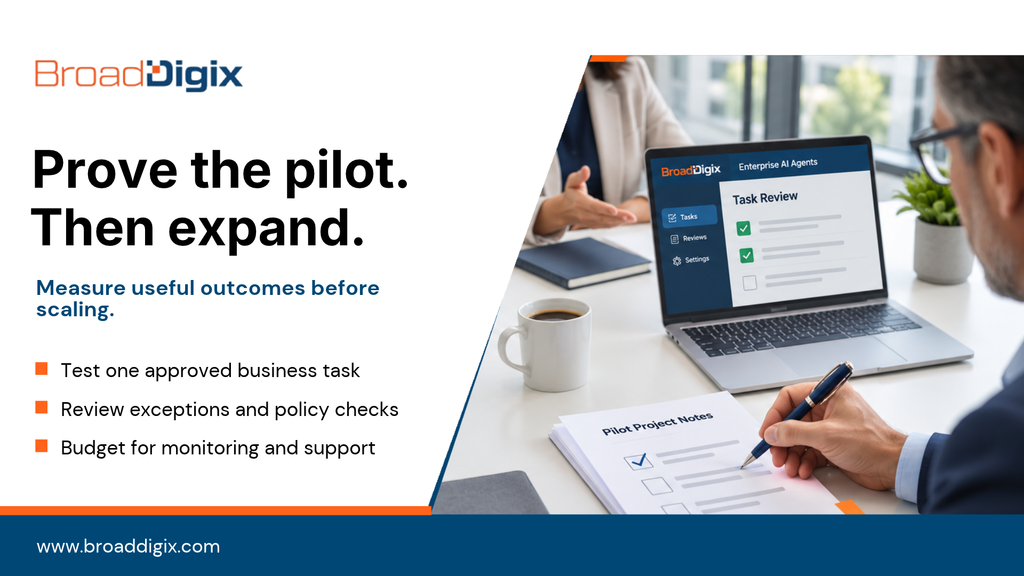
4. Test Enterprise AI Agents With a Small Pilot
Think of a realistic example. Often departmental pilots are low cost. However, when you add monitoring and access reviews the costs can increase. Your initial solution should be a small test.
Focus on the core functionality such as understanding the request, following policy and doing approved actions. Ensure you have a clear definition of when they’ve finished. Be realistic and include a normal scenario and one that could go wrong. When looking into developing enterprise AI agents think about your initial release.
Ensure you have a repeatable test. Give a small group of people a real task such as understanding the request, following policy and doing approved actions. Ask them to complete it without any guidance. Note down what went well and what didn’t.
If they had to think of workarounds then you’ve learnt something useful from your pilot (even if it doesn’t reflect well!). Ensure your pilot is small so you can make changes without incurring high costs. The next useful step when looking into developing enterprise AI agents is to ensure you’re solving their initial release.
A small pilot helps organizations evaluate AI agent development for enterprises before committing to a wider deployment.
5. Understand Enterprise AI Agent Development Costs and Investment
Often the cost quoted in your proposal will be the most interesting thing in the room. However, costs can often be hidden in training, integration changes and exception resolution.
Think about your platform architecture, security review, integration and operational support before you commit to building. For example, if your employees don’t know where the policy summary came from they won’t trust the answer. This will help you to make decisions before you start building. When looking into developing enterprise AI agents think about your investment.
Consider your support and training. Whilst you may have an initial cost for engineering, somebody will be responsible for the integration, access, bug fixing and process changes. Think about your platform architecture, security review, integration and operational support from the start.
This isn’t to make your idea seem expensive but so you know what you’re committing to. Usually hidden costs will be something that wasn’t mentioned in your estimate. The next useful step when looking into developing enterprise AI agents is to ensure you’re solving their investment. A realistic budget for AI agent development for enterprises should account for ongoing maintenance, integrations, and operational support.

6. Measure Enterprise AI Agent Success and ROI
Just because you’ve announced your launch doesn’t mean you’ve got value. Think about whether your results have improved such as validated task outcomes with policy followed. Agree on a baseline and reasonable timeframe to review. When looking into developing enterprise AI agents think about your evidence of value.
For example, your agent will need to read from one system but shouldn’t have global write access. This will help you to make decisions before you start building. Agree on what would convince a sceptical colleague. A practical example would be validated task outcomes with policy followed. Another could be that issues are resolved without too much effort. Look at the numbers alongside user feedback.
Just because there is a lot of activity doesn’t mean it’s a good thing. They could be having to do extra steps that they used to do easily. Get some honest feedback from real users. The next useful step when looking into developing enterprise AI agents is to ensure you’re solving their evidence of value.
Measuring business outcomes is essential when evaluating the long-term return on AI agent development for enterprises.
7. Plan the Next Steps for Scaling Enterprise AI Agents
For example, you’ve upgraded your model so your agent handles an internal exception type differently. Once your initial solution is working don’t be tempted to add all the things you’ve been holding back on. What has changed in their day-to-day? What has caused confusion?
What issue do they need to focus on now? A useful next step will be more specific than a big impressive roadmap. When looking into developing enterprise AI agents think about your next decision.
AI agent development for enterprises requires continuous monitoring, performance evaluation, and a clear strategy for scaling successful AI solutions.
Your next stage should be smaller and clearer. A useful handover will give you a simple explanation of how things work normally. Who gets notified of a failure? Who can change a setting? What logs can be used to investigate? What would make you want to scale up the tool? These are just as important as your first working feature. This means you can improve your investment without becoming reliant on one person.
Ensure you’re improving based on evidence. The best thing to do as your first step is to keep it intentionally simple. Write down the problem, who it affects and test one useful change. Starting with clarity will give you something to be ambitious about. Ultimately, AI agent development for enterprises delivers greater value when organizations prioritize measurable outcomes, secure implementation, and continuous improvement.
Learn more about BroadDigix’s machine learning and AI solutions for businesses seeking scalable intelligent systems.